
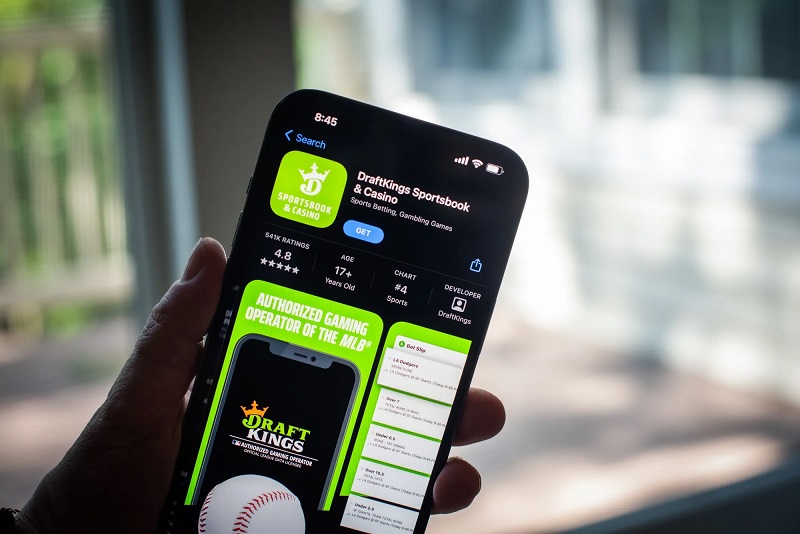
Stepping into a modern digital sportsbook for the first time can feel like walking onto the floor of the New York Stock Exchange. A single NFL Sunday or NBA slate presents thousands of rapidly changing numbers, positive and negative signs, and an alphabet soup of tabs ranging from alternate spreads to player milestone props. For newcomers, this visual overload often leads to hurried decisions or default wagering on familiar team names without understanding the underlying mechanics of the bet itself.
Every wagering option listed on a screen represents a distinct betting market. Each market operates under its own set of rules, risk profiles, and mathematical expectations. Navigating these platforms effectively requires more than sporting knowledge; it demands fluency in how sportsbooks package and price competitive outcomes. Understanding the primary betting markets enables new participants to choose formats that match their analytical strengths, risk tolerance, and entertainment goals.
The Foundation: The Three Primary Straight Markets
The vast majority of online wagering volume flows through three traditional markets, often grouped together at the top of any game screen: the moneyline, the point spread, and the total. Mastering these three formats provides the groundwork for every other derivative market available online.
The Moneyline: Outright Winners
The moneyline is the simplest conceptual bet in sports: you are choosing which team or individual will win the contest outright. Margin of victory, total points scored, and individual statistics are irrelevant.
In American odds notation, moneyline pricing is expressed using plus and minus symbols relative to a baseline of $100:
-
The Minus Sign (-) indicates the favorite. The number represents the amount of money you must risk to win $100 in profit. For instance, a favorite listed at -160 requires a $160 wager to return $100 in net profit (plus your original $160 stake back).
-
The Plus Sign (+) indicates the underdog. The number represents the amount of profit you will win on a $100 wager. A team priced at +140 returns $140 in profit on a successful $100 bet.
While straightforward, moneyline markets require an appreciation of implied probability. Heavy favorites may feel like safe choices, but laying steep prices (such as -400) leaves little room for error, as one unexpected upset can erase the profits of multiple successful wagers.
Point Spreads: Leveling the Playing Field
When two unevenly matched opponents face each other, an outright winner market can become lopsided and expensive. The point spread solves this problem by assigning a virtual handicap to each side, effectively leveling the competitive playing field for betting purposes.
The favorite “gives” points, indicated by a minus sign, while the underdog “receives” points, indicated by a plus sign:
-
If the Kansas City Chiefs are favored by -6.5 points against the Las Vegas Raiders (+6.5), the Chiefs must win by 7 points or more to “cover the spread.”
-
Conversely, a bet on the Raiders cashes if Las Vegas wins the game outright or loses by 6 points or fewer.
Because the handicap brings the perceived matchup closer to a 50-50 proposition, the price on either side typically hovers around -110. This standard pricing reflects the bookmaker’s commission, commonly referred to as the juice or vigorish. Point spread betting shifts the bettor’s focus from “Who wins the game?” to “Does the performance exceed the market’s expectation?”
Totals (Over/Under): Wagering on Game Flow
Totals allow participants to engage with a game without having to back a specific team. In this market, the oddsmaker sets an expected combined point, run, or goal total for the entire game, and participants wager on whether the actual final score will fall over or under that projection.
If an NBA total is set at 224.5, a wager on the Over cashes if the combined final score is 225 points or higher. A wager on the Under wins if the total finishes at 224 or lower.
Totals are heavily influenced by game tempo, offensive and defensive efficiency, weather conditions in outdoor sports, and referee tendencies. For analytical bettors, totals offer an appealing alternative to picking sides, as a fast-paced shootout or an ugly defensive struggle can often be anticipated regardless of who ultimately wins.
Specialty and Derivative Markets
Beyond the standard three options, online sportsbooks use data feeds and automated modeling to produce hundreds of supplementary wagering opportunities for every event.
Proposition Bets (Props)
Proposition bets, commonly known as props, focus on specific occurrences or individual milestones within an event rather than the game’s final outcome. These markets generally divide into two categories:
-
Player Props: Wagers tied directly to individual performance metrics, such as whether a quarterback will throw for over 265.5 passing yards, whether a basketball player will record more than 8.5 rebounds, or whether a baseball pitcher will record over 6.5 strikeouts.
-
Team and Game Props: Wagers on structural events, such as which team will score first, whether the game will go to overtime, or the total points scored in a single quarter or half.
Player props have exploded in popularity among digital bettors, particularly those with backgrounds in fantasy sports. Because individual matchups are easier to isolate than full-team dynamics, dedicated research into coaching schemes and positional defensive weaknesses often yields actionable insights in prop markets.
Futures Markets
Futures represent long-horizon investments where the outcome is decided weeks or months down the line. Common examples include picking the Super Bowl champion in the preseason, forecasting division winners, or betting on individual awards like the NBA Most Valuable Player or the MLB Cy Young Award.
Futures odds are typically long, offering attractive payouts on modest stakes. However, new bettors must weigh those payouts against the opportunity cost: funds tied up in futures markets remain locked for an extended period, vulnerable to sudden changes like catastrophic player injuries, trades, or mid-season slumps.
Live (In-Play) Betting
Mobile technology has transformed live betting into one of the most active segments of digital sportsbooks. Once an event begins, algorithms adjust lines in real time after nearly every play, pitch, or possession based on score differential, clock status, and momentum.
Live markets allow bettors to capitalize on observations that pre-game models might have missed, such as early foul trouble, unexpected tactical adjustments, or an injury to a key role player. However, in-play markets require strict discipline. The fast pace and split-second odds shifts make it easy to make reactive, emotional wagers, often at an increased bookmaker margin.
Multi-Leg Bets: Parlays and Same-Game Parlays
A parlay combines two or more individual wagers into a single ticket. To win, every individual selection (known as a “leg”) must be correct. A single incorrect prediction results in a total loss of the wager.
The attraction of parlays lies in compounding odds: linking three or four modest selections can transform standard odds into a substantial prospective payout. Online books have leaned heavily into this demand by introducing Same-Game Parlays (SGPs), which allow users to combine correlated outcomes from a single matchup, such as a quarterback hitting an over yardage threshold alongside his primary wide receiver scoring a touchdown.
While entertaining, parlays carry an aggressive structural disadvantage. Every leg added compounds the sportsbook’s built-in mathematical advantage, making multi-leg tickets far less likely to be profitable over the long run than disciplined straight betting.
Core Habits for Long-Term Navigation
Succeeding in digital betting markets requires a clear understanding of the environment and strict operational rules:
-
Practice Line Shopping: Digital sportsbooks operate independently and post slightly different odds and spreads. Maintaining accounts across two or three licensed platforms allows you to secure the best available number on every wager. Gaining an extra half-point on a point spread or five extra cents of value on a moneyline creates a massive difference in cumulative results over an entire season.
-
Establish a Strict Unit System: Treat wagering capital as an entertainment budget. Define a standard betting “unit”—typically 1% to 2% of your total designated bankroll—and avoid the temptation to increase bet sizes haphazardly to chase previous losses.
-
Recognize the Cost of the Juice: Remember that a -110 line on both sides of a market means the sportsbook takes roughly a 4.5% commission. Understanding that baseline hurdle helps ground expectations and reinforces the importance of selectivity.
Entering the digital sports wagering landscape with a firm grasp of market mechanics turns a confusing screen of flashing numbers into a structured, manageable catalog of strategic options. By starting with primary straight markets and mastering the relationship between pricing and probability, new participants can navigate the online betting space with clarity, control, and realistic expectations.
