
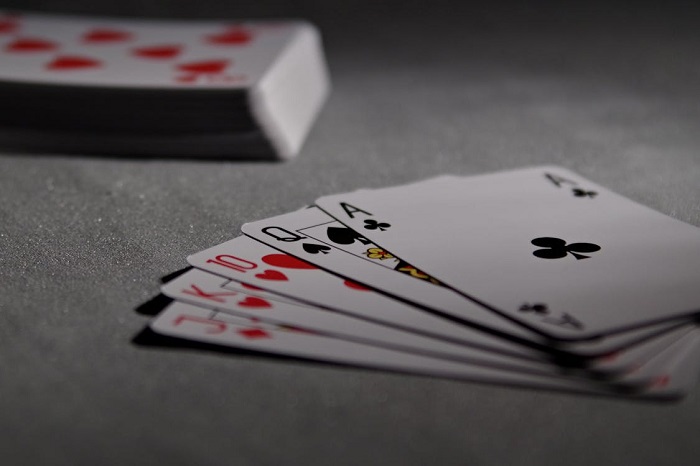
Every competitive card player knows the sting of a crushing opening hand. You shuffle meticulously, sit across from an opponent, draw your initial cards, and find yourself staring at an unplayable brick. Moments later, your opponent smoothly sequences their turns, draws the exact card needed to seal victory, and extends a handshake. In the immediate aftermath, it is tempting to blame the loss entirely on bad luck, just as it is easy for the winner to attribute their triumph strictly to superior intellect.
This tension sits at the very heart of modern strategy-based card games. Whether analyzing trading card titans like Magic: The Gathering and Disney Lorcana, digital card battlers like Hearthstone and Marvel Snap, or complex deck-building board games like Dominion and Dune: Imperium, the debate over luck versus skill remains perpetual. Yet viewing these two forces as opposing ends of a single spectrum misunderstands how modern card games function. Rather than diminishing skill, the calculated presence of randomness is the very catalyst that makes strategic mastery possible.
The False Dichotomy: Why Randomness Demands Skill
In fully deterministic games like chess or Go, both players operate with complete information. Every piece is visible, no dice are rolled, and no decks are shuffled. Victory belongs to the player who can calculate deeper variations, recognize tactical motifs, and avoid mechanical errors. Because the board state is predictable, memorization of opening lines and established endgame tables plays an enormous role.
Modern strategy card games operate under an entirely different philosophy: incomplete information combined with dynamic uncertainty. If you removed the shuffled deck and allowed players to order their cards prior to the match, the games would rapidly collapse into solved, repetitive scripts. The opening moves would become completely uniform, and the player with the mathematically superior combo would win almost every match with mechanical certainty.
Randomness breaks this predictability. It forces players out of rote memorization and drops them into fluid, high-stakes problem-solving. In this environment, skill is not the ability to execute an unyielding script; it is the capacity to navigate uncertainty. The deck shuffle does not replace skill—it creates the problems that skill is required to solve.
Input Randomness Versus Output Randomness
To understand how games handle chance, game designers and analysts frequently distinguish between two fundamental mechanics: input randomness and output randomness.
Input Randomness: The Canvas for Adaptation
Input randomness occurs when a random event happens before a player makes a decision. The most universal example is the standard card draw. You draw a card, assess the newly expanded hand, evaluate the board state, and determine your best line of play based on the tools now available.
Because input randomness presents information prior to action, it actively rewards strategic depth. It tests a player’s flexibility, board evaluation, and resource management. When a sudden draw derails your original plan, you must triage the situation, pivot your game plan, and discover an alternative path to victory. Top-tier competitors excel precisely because their game plans can flex when they do not draw their ideal curve.
Output Randomness: The Risk of Resolution
Output randomness occurs when a player commits to an action, and the resolution of that action is decided by a roll of the dice, a coin flip, or a randomized effect. Examples include cards that read “deal two to four damage to a random enemy” or effects that hit a target chosen at random from several possibilities.
High concentrations of output randomness can feel profoundly frustrating because they sever the link between thoughtful planning and execution. A player can formulate a brilliant tactical sequence, only for a coin toss to undo the entire turn. Consequently, most modern competitive card games deliberately minimize high-variance output randomness, preferring to keep the unpredictability concentrated on the draw step, draft pool, or resource allocation. When output randomness does exist, modern competitive designs usually balance it by ensuring that even the low-end outcome offers a measurable baseline of value.
Deck Architecture as Variance Management
The battle between luck and skill begins long before players sit down at a table. In constructed formats, deck building is an exercise in applied probability. A novice player packs their deck with high-impact, splashy cards, hoping that sheer power will carry the day. An expert builds a well-oiled mathematical engine designed to systematically tame the deck’s inherent variance.
Skillful deck construction relies on several core principles:
-
Mana and Resource Curves: Structuring costs so that the probability of having an executable play on turn one, two, and three approaches statistical certainty.
-
Redundancy: Running functional duplicates of essential effects to ensure the deck’s primary engine operates smoothly, regardless of which specific cards appear.
-
Filtering and Card Velocity: Incorporating draw spells, card selection, and cycling mechanics that allow the player to dig through the deck rapidly to find situational answers.
-
Search Mechanics (Tutors): Including cards that search the library directly for specific answers, turning a randomized deck into an accessible toolbox.
A master deck builder accepts that bad draws will happen, but they build safety nets into the deck’s structure. By optimizing card counts, land ratios, and draw engines, they shave percentage points off the house edge of randomness, giving their strategic execution room to shine.
Incomplete Information and Expected Value
Once a match begins, skill manifests as an ongoing calculation of probability and psychological assessment. Because your opponent holds a concealed hand, you are never playing in a vacuum. You are playing against a range of possible holdings.
Elite card players make decisions based on expected value (EV) rather than raw outcomes. They weigh the potential reward of a line of play against the statistical likelihood that the opponent has the exact counter in hand. If a specific aggressive attack succeeds 75% of the time and wins the game on the spot, taking that line is objectively correct—even if the opponent happens to hold the 25% outlier that punishes the play.
Amateur players frequently fall victim to outcome bias, commonly known as resulting. If a high-percentage, mathematically sound play fails due to an unlucky draw, the amateur laments the decision and vows never to make it again. The professional recognizes that the decision was correct based on available information, shrugs off the short-term variance, and makes the exact same play the next time the situation arises.
The Law of Large Numbers and the Hallmarks of Elite Play
If modern card games were dominated purely by luck, tournament standings would resemble a chaotic lottery, with random hobbyists constantly hoisting championship trophies. Instead, competitive circuits consistently feature the same core group of elite professionals in top-eight cuts and championship brackets year after year.
This phenomenon is explained by the law of large numbers. Over a sample size of three or four games, variance can easily drown out skill. A complete novice can draw an unbeatable curve, catch a seasoned champion on a dead draw, and steal a match. But over a grueling twelve-round weekend tournament consisting of thirty or more games, luck regresses to the mean.
The edge that an elite player holds on each individual decision might only be 2% or 3%. They optimize a combat trade slightly better, manage their mana marginally cleaner, and read an opponent’s telegraph with greater accuracy. Across a single game, that slight advantage is vulnerable to an unlucky topdeck. Across hundreds of turns over an entire weekend, those fractional advantages compound relentlessly, lifting the stronger player above the noise of raw chance.
Alongside technical play, mental discipline serves as a vital component of skill. Tilt management—the ability to remain emotionally level and analytical after suffering an improbable loss—separates perennial winners from perennial contenders. Players who accept variance as an operating cost avoid emotional spirals, ensuring that an unlucky break in game one does not bleed into poor decision-making in game two.
The Harmony of the Modern Table
Card games hold an enduring fascination precisely because they mirror the reality of decision-making in everyday life. We rarely navigate circumstances of perfect information and absolute control. More often, we are dealt an imperfect hand, confronted with an unpredictable environment, and forced to make the best possible choice with the resources at our disposal.
By wrapping deep tactical mechanics around a core of calculated randomness, modern strategy card games achieve a rare balance. Luck provides the drama, the dynamic puzzles, and the thrill of the unexpected; skill provides the agency, the architectural mastery, and the satisfaction of a calculated victory. When combined, they turn a simple collection of printed cards into an endlessly replayable battle of wits.
